
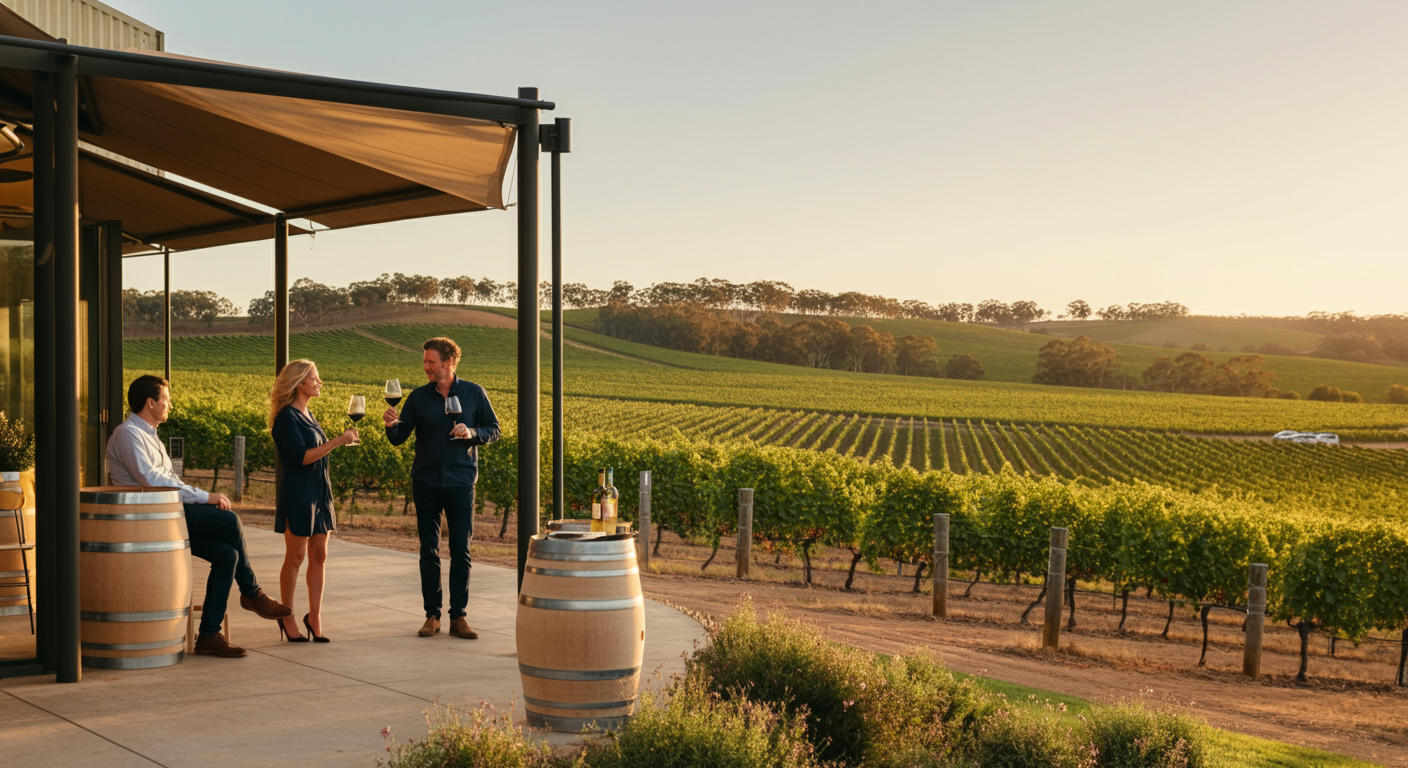
You're sitting on a goldmine. Your cellar door is more than just a place to pour wine – it's an opportunity to create lasting memories and boost sales.
In this article
In this article, you'll learn practical strategies and actionable insights that you can implement immediately in your tourism business.
The Untapped Potential of Cellar Door Sales
The Australian wine industry is booming. Despite this, many smaller wineries miss out on direct sales. A well-executed cellar door experience can change that. According to Wine Australia, cellar door sales account for a significant portion of direct-to-consumer revenue, offering higher margins than wholesale channels. You're missing out on real dollars if you're not optimising this key touchpoint. Let's get practical.
What's at Stake Right Now?
Think about it. Each visitor represents a potential sale, a brand advocate, and a source of valuable feedback. Every visitor who walks away without a purchase is a missed opportunity. Let's estimate. Even converting just 10% more of your visitors into purchasers can add thousands of dollars to your bottom line each month. For example, if you get 100 visitors a week and your average sale is $50, that's $500 extra a week, or $2,000 a month. That's money you can reinvest in your business.
Creating Memorable Tasting Experiences
The key is to offer more than just a taste of wine. You want to create an experience that engages all the senses and leaves a lasting impression. Here's how:
- Personalisation: Offer personalised tastings based on customer preferences. Ask about their wine knowledge and what they usually drink. Tailor the tasting flight accordingly. A simple question like "What kind of wines do you typically enjoy?" can make a big difference.
- Storytelling: Share the story behind your wines and your winery. People connect with stories. Talk about your family history, your winemaking philosophy, and the unique characteristics of your region. People will pay extra for a product with a good story.
- Education: Provide informative and engaging commentary on each wine. Explain the grape varietal, the terroir, and the winemaking process. Avoid jargon. Keep it simple and accessible. Consider using tasting notes as a guide, but don't just read them out.
- Presentation: Pay attention to the details. Use quality glassware. Keep the tasting area clean and well-organised. Consider offering small food pairings to complement the wines (Australian cheeses are always a winner!).
- Ambience: Create a welcoming and relaxed atmosphere. Music, décor, and lighting all contribute to the overall experience. Think about your winery's style and create an ambience that reflects it. If you're near a bushfire prone area, make sure you are communicating how you will handle that kind of emergency if it arises.
Driving Sales Through Experiences
Cellar door tastings are a sales opportunity, plain and simple. Here's how to maximise your sales potential:
- Offer exclusive wines: Reserve some wines exclusively for cellar door sales. This creates a sense of exclusivity and encourages visitors to buy. Limited release and back vintages often work well here.
- Package deals: Create attractive package deals that combine wine with other products or experiences. Offer a discount on a case of wine purchased after a tasting.
- Wine club: Promote your wine club and encourage visitors to join. This is a great way to build loyalty and generate recurring revenue. Provide club-exclusive benefits that reward ongoing membership.
- Online store: Make it easy for visitors to purchase wine online after their visit. Send a follow-up email with a link to your online store and a special offer.
- Staff training: Ensure your staff are knowledgeable, friendly, and enthusiastic. Train them on how to conduct effective tastings and close sales. Incentive them based on sales targets.
Implementation Guide: Turning Ideas into Action
Here's a step-by-step guide to revamping your cellar door tasting experience:
- Assess your current experience: Take a critical look at your existing tasting experience. What's working? What could be improved? Get feedback from customers and staff.
- Define your target audience: Who are you trying to reach? Tailor your experience to appeal to your target audience.
- Develop a unique tasting menu: Create a tasting menu that showcases your best wines and tells your story.
- Train your staff: Provide your staff with the knowledge and skills they need to conduct effective tastings and close sales.
- Promote your cellar door: Let people know about your cellar door and the unique experience you offer. Use social media, your website, and other marketing channels.
- Gather feedback and iterate: Continuously gather feedback from customers and staff and use it to improve your tasting experience.
- Measure results: Track key metrics, such as visitor numbers, conversion rates, and average sale value. Use this data to optimise your performance.
- Tourism Australia: https://www.tourism.australia.gov.au - Access industry insights and marketing resources.
- Wine Australia: https://www.wineaustralia.com - Find information on the Australian wine industry.
- Canva: https://www.canva.com - Create marketing materials for your cellar door.
- Mailchimp: https://mailchimp.com - Manage your email marketing and promote your wine club.
- TripAdvisor Business: https://business.tripadvisor.com - Manage your online reputation and gather customer reviews.
- Square Point of Sale: https://squareup.com/au/en - Streamline your payment processing and inventory management.
Key Takeaways
- Cellar door tastings are a powerful tool for driving sales and building brand loyalty.
- Create memorable experiences that engage all the senses.
- Train your staff to conduct effective tastings and close sales.
- Promote your cellar door and make it easy for visitors to purchase wine online.
- Continuously gather feedback and iterate on your tasting experience.
Next Steps
- Review your current cellar door experience and identify areas for improvement.
- Develop a unique tasting menu that showcases your best wines and tells your story.
- Train your staff on how to conduct effective tastings and close sales.